




Auction Info
Auction Information Kaori International Co., Ltd
Transparent Auction Guidance for Confident Vehicle Buying
At Kaori International, we’re committed to helping you make informed vehicle purchases from Japanese auto auctions. This page explains how to read and understand Japanese auction sheets, the grading system, and how we support you throughout the buying process.

How to Read Japanese Auction Sheets
Every auctioned vehicle in Japan comes with a detailed inspection report known as an auction sheet. These sheets are created by certified inspectors and provide an honest assessment of the vehicle’s condition.
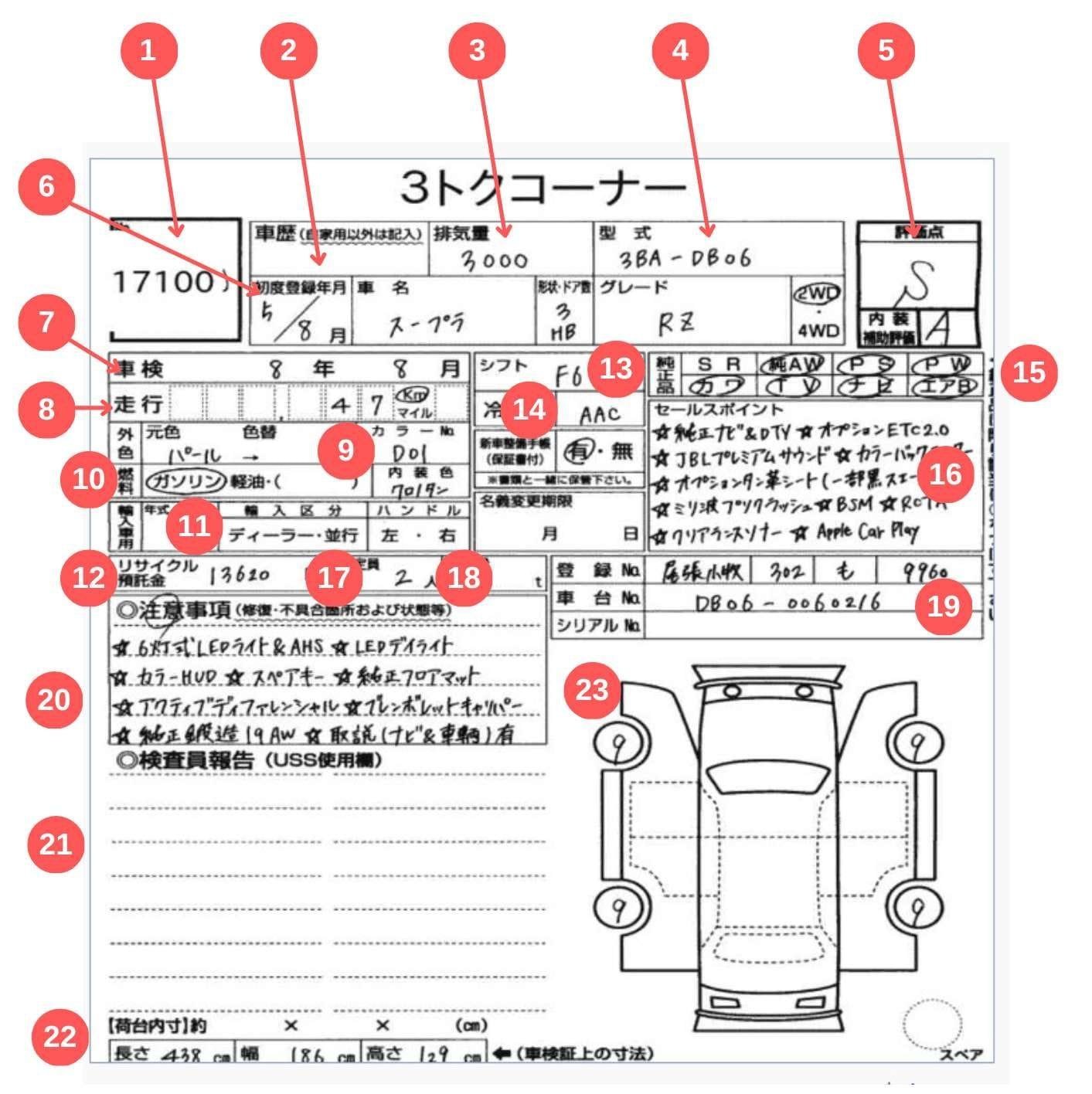
Exhibit Number/ Auction Number
Car History
Displacement
Model
Auction Grade
First Registration Year/Month
Vehicle Inspection
Mileage
Colour
Fuel Type
Exhibitor (Dealer or Individual)
Recycle
Transmission
Cooling / Air-Conditioning
Genuine Options
Sales Point
Weight
Chassis Number
Precautions (repair/defects & condition)
Car Examination report by Auction Staff
Dimensions (L/W/H)
Scratches/ Dents/Damages found at Inspection
Understanding Auction Grades
Auction grades give a quick idea of the vehicle’s exterior condition and overall quality.
Interior Condition Grades
Interior condition is also rated separately to reflect cleanliness and wear
Frequently Asked Questions (FAQ)
What is an auction sheet?
An auction sheet is an official inspection report created by certified inspectors at Japanese auction houses. It summarizes the car’s condition, history, mileage, options, repairs, and any visible damage.
Can I trust the auction sheet information?
Yes. Auction sheets are independent evaluations—not created by sellers. While some human error is possible, Japanese auctions have strict inspection standards, and most reports are accurate and reliable.
What do the auction grades mean?
Auction grades represent the overall condition of the vehicle, from Grade 5 (excellent) to Grade 2 or R (poor or accident-repaired). Interior grades (A to D) show the cabin’s cleanliness and wear. Visit our grading guide for full details.
Can I request a translated auction sheet?
Absolutely! KAORI International provides complete English translations for any vehicle you’re interested in. We’ll also highlight critical damage, repairs, or other notes so you can make an informed decision.
Can I make a claim if the car has hidden issues?
Claims are possible for certain vehicles, especially those under 10 years old, if major issues were not disclosed in the auction report. We’ll guide you through the claim process if needed. However, older vehicles are often sold as-is.
What if I don’t understand the symbols or Japanese text?
You don’t have to! We translate every part of the auction sheet—including damage diagrams and inspector comments—into clear English. Our team also explains any unfamiliar terms before you bid.
Can I bid on any vehicle listed at auction?
Yes, but we recommend you consult with our team first. We’ll review the vehicle’s condition, check bidding history, and advise you on pricing to avoid overpaying or bidding on risky vehicles.
Why are some cars graded R or 0?
Is it safe to buy older or low-grade vehicles?
Can I get photos or video of the car before I bid?
In most cases, yes. Auction houses provide images, and we request additional media where possible. We’ll help you assess condition beyond the auction sheet whenever available.
Need Help with Auction Sheets? Contact Us Today
Have questions about a vehicle, auction grades, or translation support? Our team at Kaori International is ready to guide you through every step of the process — from understanding inspection reports to securing your ideal car. Reach out now for fast, friendly, and professional assistance.